Job-Oriented Data Science Course With AI in Andheri

⭐⭐⭐⭐⭐
Master Data Science with Real-World Projects!
Ntech Global Solutions offers a comprehensive Data Science course that blends AI, Machine Learning, Python, and Data Analytics to help you become a full-stack data scientist. From basic statistics to advanced predictive modeling, we’ve got you covered.
Student's Trained
0Hiring Partners
0Placement Record
0/span>Highest Salary Drawn
0Course Overview
The Data Science with AI Course in Andheri by Ntech Global Solutions is an industry-focused training program designed for students, working professionals, and business owners. This course is ideal for learners who want to solve real-world business problems using data analytics, machine learning, and artificial intelligence. In today’s digital era, industries such as finance, healthcare, ecommerce, IT, manufacturing, and marketing rely heavily on data science for decision-making and innovation.
This comprehensive Data Science training in Andheri covers Python programming, SQL, statistics, data visualization, machine learning algorithms, predictive analytics, AI fundamentals, and real-time data science tools. The program is delivered by industry-experienced trainers who provide practical exposure through live projects and real business case studies.
Whether you are a fresher looking to start a career in data science or a working professional aiming to upskill in the rapidly growing AI and data science domain, this course equips you with job-ready skills. The training also includes capstone projects, resume preparation, mock interviews, and placement assistance, helping you confidently prepare for data science roles.
By the end of the course, you will be able to collect, clean, analyze, and visualize data, build machine learning models, and generate AI-driven insights to support strategic business decisions. This AI-integrated Data Science Course in Mumbai provides a strong foundation to become a future-ready Data Scientist, Machine Learning Engineer, or AI Analyst.
Program Features

Live Interactive Sessions

Industry Expert Trainer

Comprehensive Curriculum

Hands-on Projects

Doubt-Clearing Sessions

Flexible Batches

80/20 Learning Approach

100% Placement
What You’ll Master
Kickstart your Data Science journey with our all-in-one course! Learn Python, Machine Learning, AI, Data Visualization, and more—using industry-standard tools and real-world datasets. Boost your skills and launch a career in the world of Data Science and Artificial Intelligence!










Data Science With AI Curriculum
Module 1: DATA SCIENCE ESSENTIALS
- Introduction to Data Science
- Evolution of Data Science
- Big Data Vs Data Science
- Data Science Terminologies
- Data Science vs AI/Machine Learning
- Data Science vs Analytics
Module 2: DATA SCIENCE DEMO
- Business Requirement: Use Case
- Data Preparation
- Machine learning Model building
- Prediction with an ML model
- Delivering Business Value
Module 3: ANALYTICS CLASSIFICATION
- Types of Analytics
- Descriptive Analytics
- Diagnostic Analytics
- Predictive Analytics
- Prescriptive Analytics
- EDA and insight gathering demo in Tableau
Module 4: DATA SCIENCE AND RELATED FIELDS
- Introduction to AI
- Introduction to Computer Vision
- Introduction to Natural Language Processing
- Introduction to Reinforcement Learning
- Introduction to GAN
- Introduction to Generative Passive Models
Module 5: DATA SCIENCE ROLES & WORKFLOW
- Data Science Project workflow
- Roles: Data Engineer, Data Scientist, ML Engineer, and MLOps Engineer
- Data Science Project stages.
Module 6: MACHINE LEARNING INTRODUCTION
- What Is ML? ML Vs AI
- ML Workflow, Popular ML Algorithms
- Supervised Vs Unsupervised
- Clustering, Classification, And Regression
Module 7: DATA SCIENCE INDUSTRY APPLICATIONS
- Data Science in Finance and Banking
- Data Science in Retail
- Data Science in Health Care
- Data Science in Logistics and Supply Chain
- Data Science in Technology Industry
- Data Science in Manufacturing
- Data Science in Agriculture
Module 1: PYTHON BASICS
- Introduction to Python
- Installation of Python and IDE
- Python Variables
- Python basic data types
- Number & Booleans, strings
- Arithmetic Operators
- Comparison Operators
- Assignment Operators
Module 2: PYTHON CONTROL STATEMENTS
- IF Conditional statement
- IF-ELSE
- NESTED IF
- Python Loops basics
- WHILE Statement
- FOR statements
- BREAK and CONTINUE statements
Module 3: PYTHON DATA STRUCTURES
- Basic data structure in python
- Basics of List
- List: Object, methods
- Tuple: Object, methods
- Sets: Object, methods
- Dictionary: Object, methods
Module 4: PYTHON FUNCTIONS
- Functions basics
- Function Parameter passing
- Lambda functions
- Map, reduce, filter functions
Module 1: OVERVIEW OF STATISTICS
- Introduction to Statistics
- Descriptive And Inferential Statistics
- Basic Terms Of Statistics
- Types Of Data
Module 2: HARNESSING DATA
- Random Sampling
- Sampling With Replacement And Without Replacement
- Cochran's Minimum Sample Size
- Types of Sampling
- Simple Random Sampling
- Stratified Random Sampling
- Cluster Random Sampling
- Systematic Random Sampling
- Multi stage Sampling
- Sampling Error
- Methods Of Collecting Data
Module 3: EXPLORATORY DATA ANALYSIS
- Exploratory Data Analysis Introduction
- Measures Of Central Tendencies: Mean, Median, And Mode
- Measures Of Central Tendencies: Range, Variance And Standard Deviation
- Data Distribution Plot: Histogram
- Normal Distribution & Properties
- Z Value / Standard Value
- Empherical Rule and Outliers
- Central Limit Theorem
- Normality Testing
- Skewness & Kurtosis
- Measures Of Distance: Euclidean, Manhattan, And Minkowski Distance
- Covariance & Correlation
Module 4: HYPOTHESIS TESTING
- Hypothesis Testing Introduction
- P- Value, Critical Region
- Types of Hypothesis Testing
- Two Sample Relation T-test
- Hypothesis Testing Errors : Type I And Type II
- Two Sample Relation T-test
- One Way Anova Test
- Application of Hypothesis testing
Module 1: MACHINE LEARNING INTRODUCTION
- What Is ML? ML Vs AI
- Clustering, Classification, And Regression
- Supervised Vs Unsupervised
Module 2: PYTHON NUMPY PACKAGE
- Introduction to Numpy Package
- Array as Data Structure
- Core Numpy functions
- Matrix Operations, Broadcasting in Arrays
Module 3: PYTHON PANDAS PACKAGE
- Introduction to Pandas package
- Series in Pandas
- Data Frame in Pandas
- File Reading in Pandas
- Data munging with Pandas
Module 4: VISUALIZATION WITH PYTHON – Matplotlib
- Visualization Packages (Matplotlib)
- Components Of A Plot, Sub-Plots
- Basic Plots: Line, Bar, Pie, Scatter
Module 5: PYTHON VISUALIZATION PACKAGE – SEABORN
- Seaborn: Basic Plot
- Advanced Python Data Visualizations
Module 6: ML ALGORITHM: LINEAR REGRESSION
- Introduction to Linear Regression
- How it works: Regression and Best Fit Line
- Modeling and Evaluation in Python
Module 7: ML ALGORITHM: LOGISTIC REGRESSION
- Introduction to Logistic Regression
- How it works: Classification & Sigmoid Curve
- Modeling and Evaluation in Python
Module 8: ML ALGO: K MEANS CLUSTERING
- Understanding Clustering (Unsupervised)
- K Means Algorithm
- How it works: K Means theory
- Modeling in Python
Module 9: ML ALGO: KNN
- Introduction to KNN
- How It Works: Nearest Neighbor Concept
- Modeling and Evaluation in Python
Module 1: FEATURE ENGINEERING
- Introduction to Feature Engineering
- Feature Engineering Techniques: Encoding, Scaling, Data Transformation
- Handling Missing values, handling outliers
- Creation of Pipeline
- Use case for feature engineering
Module 2: ML ALGO: SUPPORT VECTOR MACHINE (SVM)
- Introduction to SVM
- How It Works: SVM Concept, Kernel Trick
- Modeling and Evaluation of SVM in Python
Module 3: PRINCIPAL COMPONENT ANALYSIS (PCA)
- Building Blocks Of PCA
- How it works: Finding Principal Components
- Modeling PCA in Python
Module 4: ML ALGO: DECISION TREE
- Introduction to Decision Tree & Random Forest
- How it works
- Modeling and Evaluation in Python
Module 5: ENSEMBLE TECHNIQUES - BAGGING
- Introduction to Ensemble technique
- Bagging and How it works
- Modeling and Evaluation in Python
Module 6: ML ALGO: NAÏVE BAYES
- Introduction to Naive Bayes
- How it works: Bayes' Theorem
- Naive Bayes For Text Classification
- Modeling and Evaluation in Python
Module 7: GRADIENT BOOSTING, XGBOOST
- Introduction to Boosting and XGBoost
- How does it work?
- Modeling and Evaluation in Python
Module 1: TIME SERIES FORECASTING – ARIMA
- What is Time Series?
- Trend, Seasonality, cyclical, and random
- Stationarity of Time Series
- Autoregressive Model (AR)
- Moving Average Model (MA)
- ARIMA Model
- Autocorrelation and AIC
- Time Series Analysis in Python
Module 2: SENTIMENT ANALYSIS
- Introduction to Sentiment Analysis
- NLTK Package
- Case study: Sentiment Analysis on Movie Reviews
Module 3: REGULAR EXPRESSIONS WITH PYTHON
- Regex Introduction
- Regex codes
- Text extraction with Python Regex
Module 4: ML MODEL DEPLOYMENT WITH FLASK
- Introduction to Flask
- URL and App routing
- Flask application – ML Model deployment
Module 5: ADVANCED DATA ANALYSIS WITH MS EXCEL
- MS Excel core Functions
- Advanced Functions (VLOOKUP, INDIRECT…)
- Linear Regression with EXCEL
- Data Table
- Goal Seek Analysis
- Pivot Table
- Solving Data Equation with EXCEL
Module 6: AWS CLOUD FOR DATA SCIENCE
- Introduction of cloud
- Difference between GCC, Azure, AWS
- AWS Service (EC2 instance)
Module 7: AZURE FOR DATA SCIENCE
- Introduction to AZURE ML studio
- Data Pipeline
- ML modeling with Azure
Module 8: INTRODUCTION TO DEEP LEARNING
- Introduction to Artificial Neural Network, Architecture
- Artificial Neural Network in Python
- Introduction to Convolutional Neural Network, Architecture
- Convolutional Neural Network in Python
Module 1: DATABASE INTRODUCTION
- DATABASE Overview
- Key concepts of database management
- Relational Database Management System
- CRUD operations
Module 2: SQL BASICS
- Introduction to Databases
- Introduction to SQL
- SQL Commands
- MySQL Workbench installation
Module 3: DATA TYPES AND CONSTRAINTS
- Numeric, Character, date, time data type
- Primary key, Foreign key, Not null
- Unique, Check, default, Auto increment
Module 4: DATABASES AND TABLES (MySQL)
- Create a database
- Delete database
- Show and use databases
- Create table, Rename table
- Delete table, Delete table records
- Create a new table from existing data types
- Insert into, Update records
- Alter table
Module 5: SQL JOINS
- Inner Join
- Left Join
- Right Join
- Full Outer Join
- Self Join
- Cross Join
- Multiple Table Joins
- Join with Aggregations
- Handling NULLs in joins
Module 6: SQL COMMANDS AND CLAUSES
- Select, Select distinct
- Aliases, Where clause
- Relational operators, Logical
- Between, Order by, In
- Like, Limit, null/not null, group by
- Having, Sub queries
Module 7: DOCUMENT DB/NO-SQL DB
- Introduction of Document DB
- Document DB vs SQL DB
- Popular Document DBs
- MongoDB basics
- Data format and Key methods
Module 1: GIT INTRODUCTION
- Purpose of Version Control
- Popular Version Control Tools
- Git Distribution Version Control
- Terminologies
- Git Workflow
- Git Architecture
Module 2: GIT REPOSITORY and GitHub
- Git Repo Introduction
- Create a New Repo with the Init command
- Git Essentials: Copy & User Setup
- Mastering Git and GitHub
Module 3: COMMITS, PULL, FETCH, AND PUSH
- Git Repo Introduction
- Create a New Repo with the Init command
- Git Essentials: Copy & User Setup
- Mastering Git and GitHub
Module 4: TAGGING, BRANCHING, AND MERGING
- Organize code with branches
- Check out the branch
- Merge branches
Module 5: UNDOING CHANGES
- Editing Commits
- Commit command, Amend flag
- Git reset and revert
Module 6: GIT WITH GITHUB AND BITBUCKET
- Creating a GitHub Account
- Local and Remote Repo
- Collaborating with other developers
- Bitbucket Git account
Module 1: TABLEAU FUNDAMENTALS
- Introduction to Business Intelligence & Introduction to Tableau
- Interface Tour, Data visualization: Pie chart, Column chart, Bar chart.
- Bar chart, Tree Map, Line Chart
- Area chart, Combination Charts, Map
- Dashboards creation, Quick Filters
- Create Table Calculations
- Create Calculated Fields
- Create Custom Hierarchies
Module 2: POWER-BI BASICS
- Power BI Introduction
- Basics Visualizations
- Dashboard Creation
- Basic Data Cleaning
- Basic DAX FUNCTION
Module 3: DATA TRANSFORMATION TECHNIQUES
- A TRANSFORMATION TECHNIQUE
- Exploring Query Editor
- Data Cleansing and Manipulation
- Creating Our Initial Project File
- Connecting to Our Data Source
- Editing Rows
- Changing Data Types
- Replacing Values
Module 4: CONNECTING TO VARIOUS DATA SOURCES
- Connecting to a CSV File
- Connecting to a Webpage
- Extracting Characters
- Splitting and Merging Columns
- Creating Conditional Columns
- Creating Columns from Examples
- Create Data Model
Module 1: ARTIFICIAL INTELLIGENCE OVERVIEW
- Evolution Of Human Intelligence
- What Is Artificial Intelligence?
- History Of Artificial Intelligence
- Why Artificial Intelligence Now?
- Areas Of Artificial Intelligence
- AI Vs Data Science Vs Machine Learning
Module 2: DEEP LEARNING INTRODUCTION
- Deep Neural Network
- Machine Learning vs Deep Learning
- Feature Learning in Deep Networks
- Applications of Deep Learning Networks
Module 3: TENSORFLOW FOUNDATION
- TensorFlow Structure and Modules
- Hands-On: ML modeling with TensorFlow
Module 4: COMPUTER VISION INTRODUCTION
- Image Basics
- Convolution Neural Network (CNN)
- Image Classification with CNN
- Hands-On: Cat vs Dogs Classification with CNN Network
Module 5: NATURAL LANGUAGE PROCESSING (NLP)
- NLP Introduction
- Bag of Words Models
- Word Embedding
- Hands-On: BERT Algorithm
Module 6: AI ETHICAL ISSUES AND CONCERNS
- Issues And Concerns Around AI
- AI and Ethical Concerns
- AI and Bias
- AI: Ethics, Bias, And Trust
Module 1: NEURAL NETWORKS
- Structure of neural networks
- Neural network - core concepts (Weight initialization)
- Neural network - core concepts (Optimizer)
- Neural network - core concepts (Need of activation)
- Neural network - core concepts (MSE & RMSE)
- Feed forward algorithm
- Backpropagation
Module 2: IMPLEMENTING DEEP NEURAL NETWORKS
- Introduction to neural networks with tf2.X
- Simple deep learning model in Keras (tf2.X)
- Building neural network model in TF2.0 for MNIST dataset
Module 3: DEEP COMPUTER VISION - CNN
- Convolutional neural networks (CNNs)
- CNNs with Keras
- Transfer learning in CNN
- Flowers dataset with tf2.X
- Examining x-ray with CNN model
Module 4: DEEP COMPUTER VISION - OBJECT DETECTION
- What is Object Detection
- Methods of Object Detection
- Metrics of Object Detection
- Bounding Box regression
- Labelimg
- RCNN
- Fast RCNN
- Faster RCNN
- SSD
- YOLO Implementation
- Object detection using cv2
Module 5: RECURRENT NEURAL NETWORK
- RNN introduction
- Sequences with RNNs
- Long short-term memory networks
- Bi-directional RNN and LSTM
- Examples of RNN applications
Module 6: NATURAL LANGUAGE PROCESSING (NLP)
- Introduction to Natural Language Processing
- Working with Text file
- Working with a PDF file
- Introduction to regex
- Word Embedding
- RNN model creation
- Transformers and BERT
- Introduction to GPT (Generative Pre-trained Transformer)
- State of art NLP and projects
Module 7: PROMPT ENGINEERING
- Introduction to Prompt Engineering
- Understanding the Role of Prompts in AI Systems
- Design Principles for Effective Prompts
- Techniques for Generating and Optimizing Prompts
- Applications of Prompt Engineering in Natural Language Processing
Module 8: REINFORCEMENT LEARNING
- Markov decision process
- Fundamental equations in RL
- Model-based method
- Dynamic programming model-free methods
Module 9: DEEP REINFORCEMENT LEARNING
- Architectures of deep Q learning
- Deep Q learning
- Reinforcement Learning Projects with OpenAI Gym
Module 10: GEN AI
- Gan introduction, Core Concepts, and Applications
- Core concepts of GAN
- GAN applications
- Building GAN model with TensorFlow 2.X
- Introduction to GPT (Generative Pre-trained Transformer)
- Building a Question Answer bot with the models on Hugging Face
Module 11: AUTOENCODERS
- Introduction to Autoencoders
- Basic Structure and Components of Autoencoders
- Types of Autoencoders: Vanilla, Denoising, Variational, Sparse, and Convolutional Autoencoders
- Training Autoencoders: Loss Functions, Optimization Techniques
- Applications of Autoencoders: Dimensionality Reduction, Anomaly Detection, Image
Have Any Questions? Let's talk!
Please fill out the form below to get assistance from our expert team.
Industry Projects
AI-Powered Disease Prediction System
- Healthcare
This project aims to predict diseases like diabetes, heart disease, and cancer using patient records, lab results, and lifestyle data. It involves structured healthcare datasets, feature engineering, ML/DL models, and possibly NLP for EHRs, with focus on accuracy, interpretability, and data privacy.
Fraud Detection using AI
- Banking & Finance
This project focuses on real-time fraud detection by analyzing transaction history, spending behavior, and anomalies. It uses large financial datasets, ML/DL models, anomaly detection, and may apply reinforcement learning for adaptive fraud prevention.
Personalized Recommendation Engine
- Retail & E-commerce
This project develops an AI-based recommendation system using purchase history, browsing behavior, and demographics. It applies collaborative, content-based, and hybrid filtering with deep learning for personalization, along with big data processing and e-commerce integration.
Predictive Maintenance using AI & IoT
- Manufacturing
This project predicts machine failures using IoT sensor data (vibration, temperature, usage logs) with time-series analysis, anomaly detection, and deep learning. It integrates IoT, cloud, and AI to reduce downtime, optimize maintenance, and cut costs.
AI-Powered Student Performance Analytics
- Education
This project predicts student performance and recommends personalized learning paths using academic data, attendance, and engagement metrics. It applies ML, clustering, and NLP to analyze data, enabling adaptive content and improved teaching outcomes.
Traffic Prediction & Route Optimization
- Transportation & Smart Cities
This project builds an AI system to predict traffic congestion and suggest optimal routes using GPS, camera, and historical road data. It applies ML/DL models for traffic flow and integrates with mapping APIs and reinforcement learning for dynamic route optimization.
Learning Process
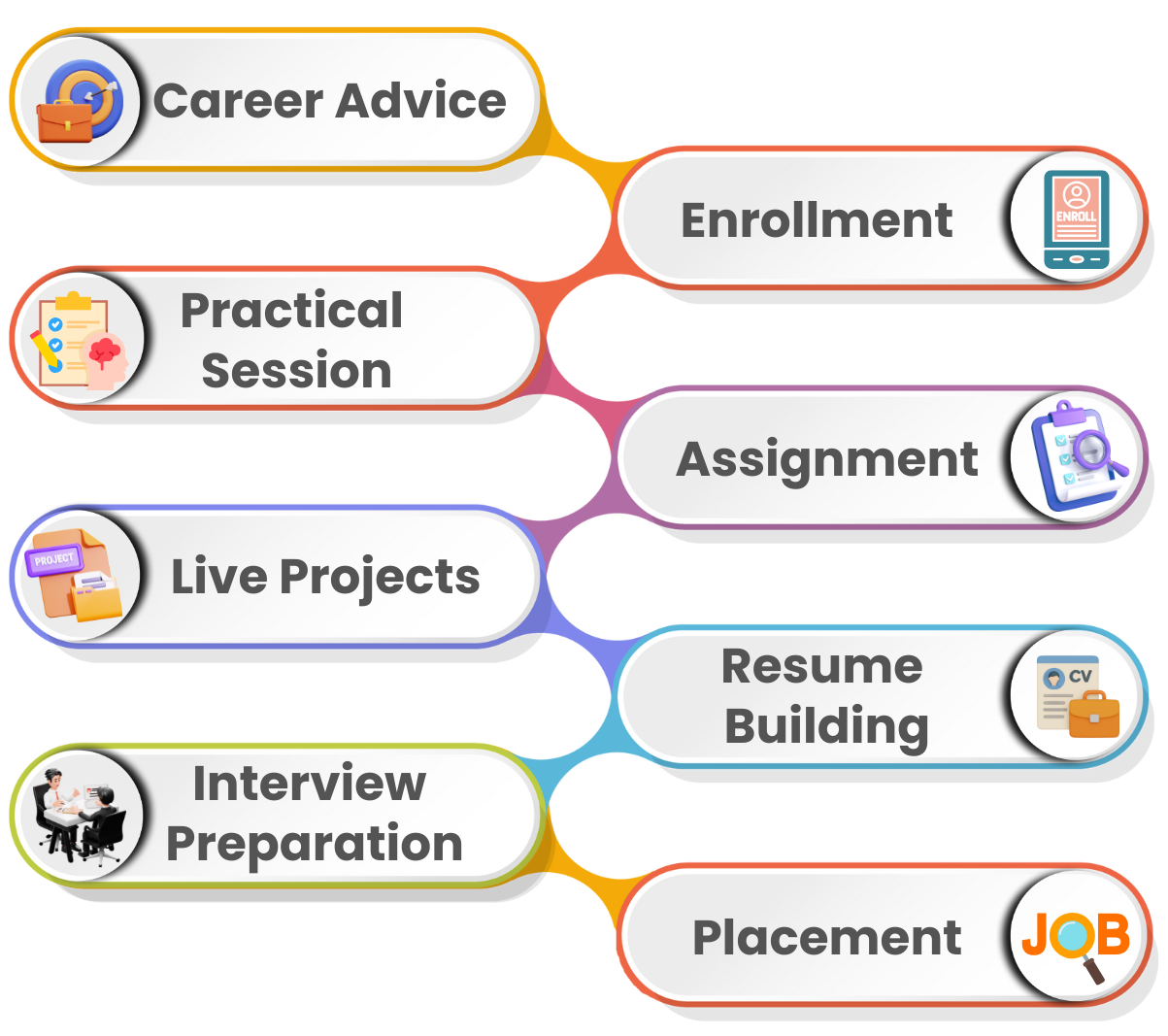
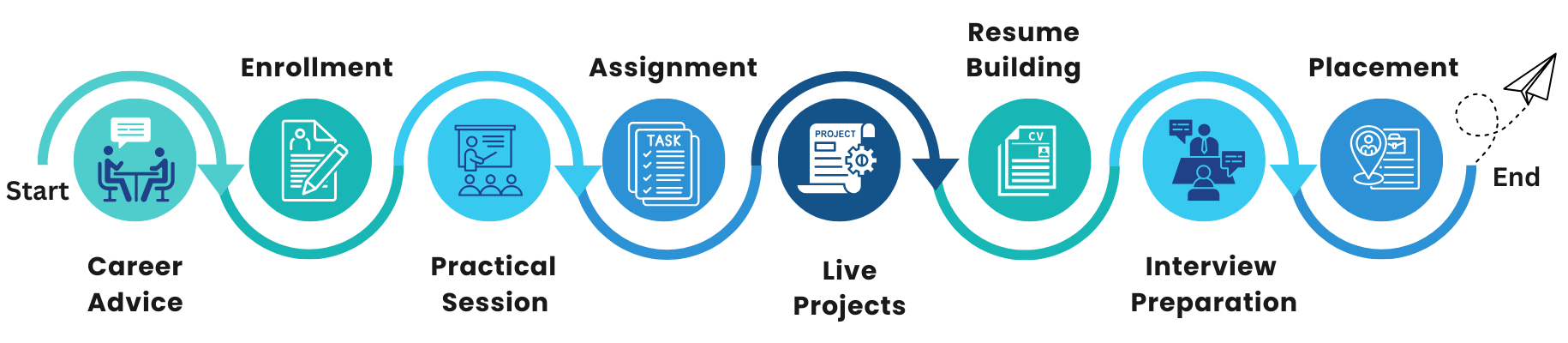
95% of our students successfully get placed after completing our programs.
Learn more about how we’ve been impacting thousands of careers.
Career Assistance Program

Softskill
Session

Resume
Building

Aptitude
Training

LinkedIn Profile Building

Mock
interview

Job
Assistance
Will I Get Certified?
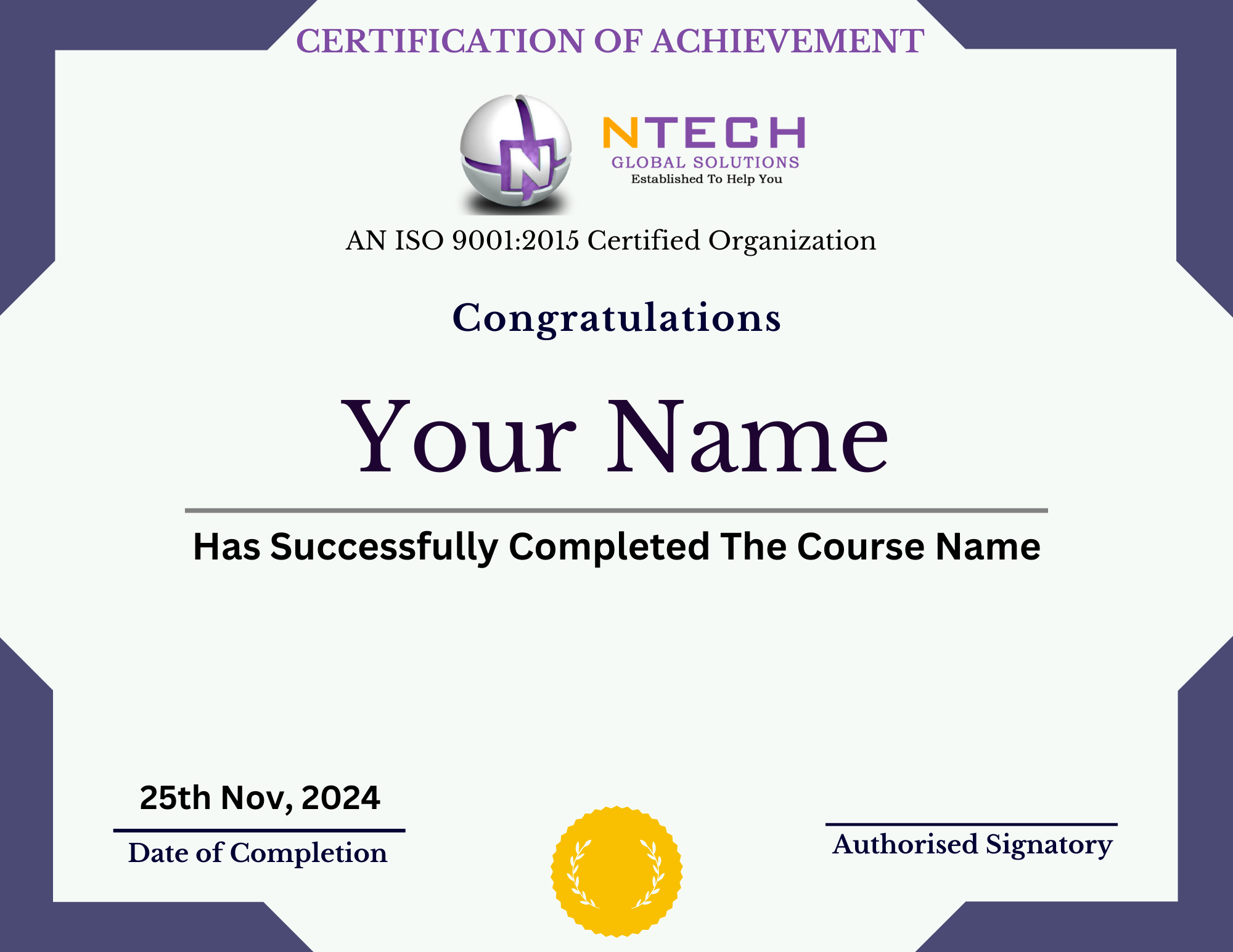
Master Data Science with AI and kickstart your journey to becoming a Data Science! With our course, you’ll earn a Certification plus module certificates as you progress, while also getting expert guidance. Inquire now to know more!
Earn Your Certificate
Share your Achievement
What Can I Become
Data Scientist
ML Engineer
Data Analyst
Business Analyst
Data Engineer
Research Scientist
AI Research Scientist
Statistician
Industries hiring data analysts:
- BFSI
- Retail
- Healthcare
- E-commerce
- Education
- Advertising & Marketing
Have any questions about our Data Science With AI Program?
EMI Starts at
₹5,000
We partnered with financing companies to provide very competitive
finance options at 0% interest rate
Financing Partners


Our Learners Work At



























Get certified proof of your industry experience to showcase your skills to recruiters!
Get certified proof of your industry experience to showcase your skills to recruiters!
It’s proof of your real-world industry exposure and practical skills. With this recognition, you can boost your resume, gain recruiters’ trust, and increase your chances of landing your dream job.
We Develop The Leaders Of Tomorrow
We are proud to have positively influenced the career foundations for thousands of learners across India and Asian countries

Aakansha Chavan
I have enrolled in Full Stack Development course in Ntech Global Solutions. I highly recommend that it is much better than any another institute Best Institute to learn Full Stack Development Course in Andheri. Thanks to all the Staffs and Faculties who were very Supportive throughout the course and help for Mock Session.

⭐⭐⭐⭐⭐

Ankita Bagwe
I recently enrolled in a Data Analyst course at Ntech Global Solutions institute, and I must say it was an excellent experience. The professors here have excellent and deep knowledge about the subject, especially in areas like statistical analysis and data visualization. The trainers here took genuine interest in teaching and ensuring the students understand the concepts, going the extra mile to explain complex modeling techniques and SQL queries. It was a good experience in learning the Data Analyst course.
⭐⭐⭐⭐⭐

Esha Jadhav
I completed my Java Full Stack course from Ntech. I would like to mention that it has been an incredible experience over here. Being from a non IT background I thought it would be difficult for me to cope up with the curriculum but with the help of trainers I am able to understand programming and efficiently implementing it. Great experience!
⭐⭐⭐⭐⭐

Gaurav Vetal
Ntech Global Solutions is good place to learn about Digital marketing. I choose this course to deept my knowledge and understanding as this subject has Specific skills which are required for my career path. The instructors were incredible. Overall experience is nice and actually enjoyed learning.
⭐⭐⭐⭐⭐

Sayali Kale
I had a great learning experience at NGS through their Data Scientist course. The trainers are highly skilled and supportive. The course started from basics, covering Python fundamentals and statistical concepts, and moved to advanced topics like predictive modeling, deep learning architectures, and model deployment (MLOps). We used tools such as Jupyter Notebooks, Scikit-learn, TensorFlow/PyTorch, and deployment platforms like AWS SageMaker and Google Cloud AI Platform. What I loved most was the capstone project experience involving a real-world dataset.
⭐⭐⭐⭐⭐

Ravindra Prajapati
I recently completed the Software Tester course at Ntech Global Solutions and had a fantastic experience. The trainer was highly experienced and made even complex topics easy to understand with real-time examples. I learned Test Case Design, Test Automation (Selenium), and Agile Methodology. We used essential tools like Jira and Postman. The practical focus, including a final automation framework project, built my confidence. Highly recommended for starting a career in QA!
⭐⭐⭐⭐⭐

Akshay Bhardwaj
I had enrolled in a data science course at Ntech Global Solutions, and I'd say it was an amazing experience. Being from a non-IT background, I had zero coding knowledge. But the instructors at Ntech Global Solutions helped me learn everything from scratch. They would always be ready to answer any queries I had during and after the course as well. I would highly recommend this institute to people looking to pursue a course in data science.
⭐⭐⭐⭐⭐
Data Analytics with AI Course in Andheri – Complete Guide to Skills, Jobs & Salary
Introduction
The demand for skilled Data Science professionals is growing rapidly across industries worldwide. Organizations today generate massive volumes of data from websites, mobile applications, CRM platforms, IoT devices, and business systems. To convert this data into actionable intelligence, companies require experts who can analyze data, build predictive models, and apply artificial intelligence to solve complex business problems.
The Data Science with AI Course in Andheri by Ntech Global Solutions is a career-focused training program designed for students, graduates, and working professionals who want to build a strong foundation in data science and artificial intelligence. This program covers the complete data science lifecycle, from data preprocessing and exploratory analysis to machine learning and AI-driven predictive modeling.
In this comprehensive guide, you will learn about the Data Science course structure, skills you gain, tools you work with, career opportunities, salary expectations, and why Andheri is an ideal location to start or advance your data science career.
1. What is Data Science?
Data Science is an interdisciplinary field that combines statistics, programming, data analysis, and artificial intelligence to extract insights and knowledge from structured and unstructured data. A data scientist works with large datasets to identify patterns, build predictive models, and support data-driven decision-making.
Artificial Intelligence enhances data science by enabling machines to learn from data, automate complex processes, detect patterns at scale, and make accurate predictions. By integrating AI techniques, data science helps organizations forecast trends, optimize operations, and gain a competitive edge.
2. Why Learn Data Science with ML & AI in 2026?
In 2026, Data Science with Machine Learning and AI is one of the most in-demand and future-ready career options. Businesses across industries use data science to automate processes, predict outcomes, and make smarter decisions. ML and AI help analyze large datasets faster, identify patterns, and generate accurate insights beyond traditional analytics.
Learning data science with ML & AI opens opportunities for high-paying roles such as Data Scientist, Machine Learning Engineer, and AI Analyst. With strong industry adoption, global demand, and long-term career growth, this skill set ensures job stability and relevance in the evolving digital landscape.
3. Why Choose Andheri for Data Science with ML & AI Training?
Andheri is India’s business and tech hub, offering access to industry experts, live projects, and networking opportunities. Training here provides exposure to real-world AI and data science applications and increases your chances of landing high-paying roles in analytics, IT, finance, and emerging AI-driven industries.
4. Skills You Will Learn in This Course (Data Science with ML & AI)
By the end of this course, you will gain job-ready skills in:
- Data Analysis & Visualization – Clean, explore, and visualize data using Python, Excel, and Power BI.
- Programming & SQL – Write efficient Python code and query databases with SQL.
- Statistics & Predictive Modeling – Apply statistical techniques and build predictive models.
- Machine Learning & AI – Implement supervised, unsupervised learning, and AI algorithms.
- Big Data & Automation – Work with large datasets and automate insights using AI tools.
- Business Intelligence – Translate data insights into actionable business decisions.
5. Translate data insights into actionable business decisions.
Completing a Data Science with ML & AI course can lead to strong salary prospects in India, especially in tech hubs like Mumbai. Salaries vary based on experience, job role, skills, and company size, but here’s a general idea of what you can expect:
| Experience | Salary Range (Mumbai) |
|---|---|
| Entry-Level (0–2 years): | Fresh graduates and beginners typically earn around ₹5 LPA – ₹9 LPA when starting out in roles like Data Analyst, AI/ML Associate, or Junior Data Scientist. |
| Mid-Level (3–5 years): | With practical experience and project exposure, salaries often rise to ₹10 LPA – ₹20 LPA, especially for roles such as Data Scientist, ML Engineer, or AI Analyst. |
| Senior Level (6+ years): | Experienced professionals, team leads, or specialists in AI and ML may command ₹20 LPA – ₹40 LPA+ in established companies or high-growth startups. |
6. Who Can Join This Course? (Data Science with ML & AI)
This course is designed for anyone looking to build a career in data science and AI, including:
- Students & Graduates – Who want to start a career in data science or analytics.
- Working Professionals – Looking to upskill in AI, machine learning, and data-driven decision-making.
- IT & Non-IT Professionals – Interested in transitioning to high-demand roles like Data Scientist, ML Engineer, or AI Analyst.
- Business Owners & Entrepreneurs – Who want to leverage data analytics and AI for smarter business strategies.
No matter your background, hands-on projects, practical training, and AI-integrated tools in this course
7. Why Choose Ntech Global Solutions?
Ntech Global Solutions is a trusted training provider for Data Science with ML & AI in Mumbai. Here’s why learners choose us:
- Industry-Experienced Trainers – Learn from experts with real-world data science and AI experience.
- Hands-On Projects – Gain practical exposure through live projects and case studies.
- Comprehensive Curriculum – Covers Python, SQL, statistics, machine learning, AI, and data visualization.
- Career Support – Resume building, mock interviews, and placement guidance to boost job readiness.
- Flexible Learning – Classroom and online options to suit students and working professionals.
8. Benefits of This Data Science with ML & AI Course
Enrolling in this course offers multiple career and skill-building benefits:
- Job-Ready Skills – Learn Python, SQL, machine learning, AI, and data visualization for real-world applications.
- Hands-On Experience – Work on live projects and case studies to gain practical knowledge.
- High Demand Career – Opens opportunities for roles like Data Scientist, ML Engineer, and AI Analyst.
- AI Integration – Learn to automate insights and enhance decision-making using AI tools.
- Career Support – Get resume guidance, mock interviews, and placement assistance.
- Future-Proof Skills – Stay relevant in the evolving digital and data-driven world.
Become a Data Sciance Specialist
Frequently Asked Questions Data Science with AI Course
Data Science with Machine Learning (ML) and Artificial Intelligence (AI) is the process of analyzing data, building predictive models, and generating intelligent insights using AI tools. It combines statistics, programming, and AI to help organizations make data-driven decisions.
This course is suitable for students, graduates, working professionals, IT and non-IT professionals, and business owners who want to build a career in data science, analytics, or AI-driven roles. No prior experience is required, though basic computer knowledge is helpful.
You will learn Python programming, SQL, data analysis, data visualization, statistics, machine learning algorithms, AI fundamentals, predictive modeling, and working with real-world projects and business datasets.
After completing this course, you can work as a Data Scientist, Machine Learning Engineer, AI Analyst, Data Analyst, Business Intelligence Analyst, or Predictive Analytics Specialist in industries like IT, finance, healthcare, ecommerce, and marketing.
Entry-level data science roles typically start at ₹5–9 LPA, mid-level professionals earn ₹10–20 LPA, and senior roles or specialists in AI/ML can earn ₹20–40 LPA+, depending on skills, experience, and the company.
Mumbai is a major hub for technology, finance, and startups. Training in Mumbai provides exposure to live projects, industry mentors, and networking opportunities, increasing your chances of landing high-paying roles in AI and data science.
The course duration typically ranges from 3 to 6 months, depending on whether you opt for full-time, part-time, or online learning. It includes live projects, capstone assignments, and hands-on lab sessions.
Yes, Ntech Global Solutions provides resume guidance, mock interviews, and placement support to help you secure roles in data science and AI-driven fields.
No, this course is designed for learners from both technical and non-technical backgrounds. Hands-on training and practical projects ensure you gain the necessary skills to succeed.
Yes, you will receive an industry-recognized certificate upon completing the Data Science with ML & AI course, which can boost your resume and credibility in the job market.
Take Action: Get Expert Guidance Now!
Ready for personalized advice? Take the first step! Fill out our form today to connect with our team of experts and get the solutions you need.

We’ll get back to you shortly
Start Your Career in
Tech Industry
Today!
Limited Time Offer!
GET 10% OFF
On All Courses

At Ntech Global Solutions, India's best training institute founded by IITians, we help people learn essential software skills. Join us to connect academia with industry.
Quick Links
Our Courses
Newsletter
Andheri (East) Branch
Address
4th Floor, Vertex Vikas Building, 401-A, Court Ln, opposite Railway Station, near Metro Station, Andheri East, Mumbai, Maharashtra 400069Phone: +91 9322015102
Other Branches
Andheri (West)
Thane (West)
Vapi
Full Stack Developer Course | Full Stack Java Developer Course | Full Stack Python Developer Course | MEAN Stack Developer Course | MERN Stack Developer Course
Digital Marketing & Ecommerce Development | Digital Marketing with Artificial Intelligence | Short Term Digital Marketing Program | Search Engine Optimization Program
AWS Solution Architect | Azure Certification Course | Cyber Security Course | Ethical Hacking Course
Software Testing | Automation Testing | Selenium Automation Testing | Performance Testing
© 2026 Ntech Global Solutions, Inc. All rights reserved.